Key takeaways
- Choose a partner for delivery maturity and communication, not hourly rate alone.
- Insist on IP assignment, an NDA, code in your own repositories and a daily time-zone overlap.
- Start with a paid discovery phase or a short trial before committing long term.
Why do US companies outsource software development?
Mostly for three reasons: access to experienced engineers without months of hiring, the ability to scale a team up or down quickly, and lower total cost than building everything in-house. Many companies also use partners for specialist skills — AI, DevOps or mobile — that are hard to hire locally.
Which engagement model is right for you?
- Fixed-price project — best when scope is clear, such as a website or a defined MVP.
- Dedicated team — a long-term squad working only on your product.
- Staff augmentation — individual engineers who join your existing team.
- Time and materials — flexible scope with transparent weekly reporting.
How do you protect your intellectual property?
Sign a mutual NDA before sharing details. Make sure the contract assigns all IP to you. Keep code in repositories you own from day one, and use role-based access to production systems. A reputable partner will welcome these terms — at CodeStackPro they are standard.
How do you handle time-zone differences?
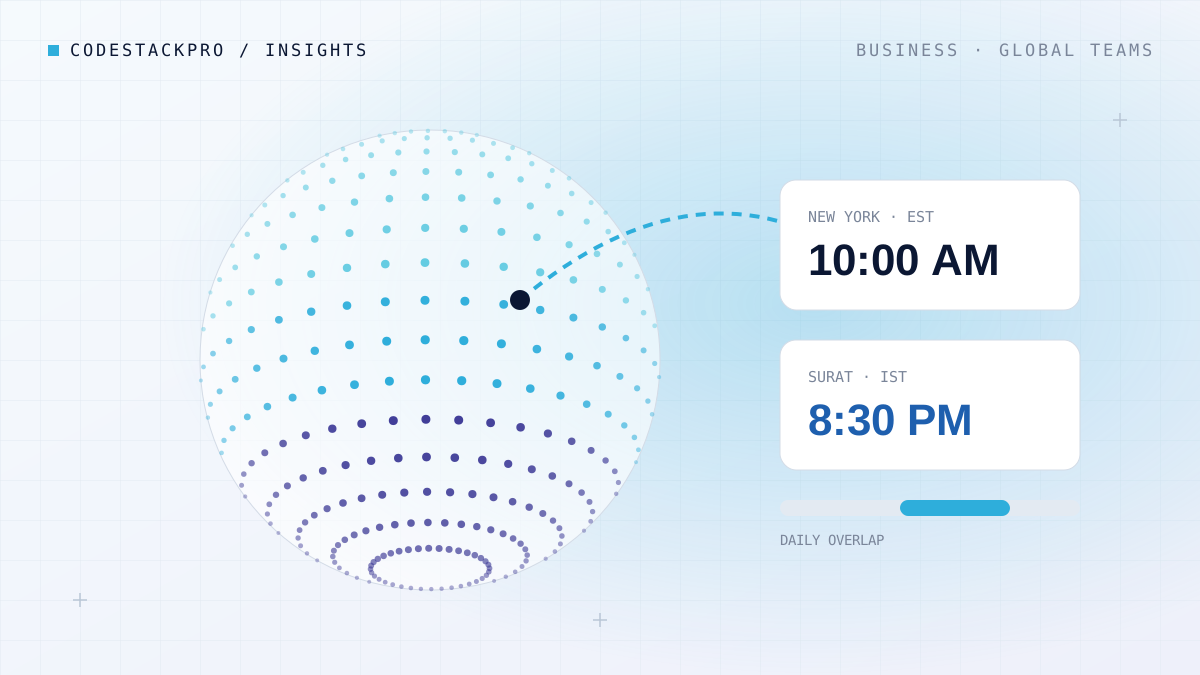
India is 9.5 to 12.5 hours ahead of US time zones. Good partners schedule a daily overlap — typically your morning — for stand-ups and decisions, then keep working while you sleep. Handled well, you often start the day with finished work waiting for review.
Questions to ask before choosing a partner
- How long have you been in business, and can I speak with clients in my region?
- Do you have case studies in my industry and technology stack?
- Can I interview the engineers who will work on my project?
- How do you run sprints, demos, testing and documentation?
- What are your security practices, and will you sign our contract terms?
CodeStackPro has worked with international clients since 2011. Get in touch to discuss a low-risk trial.