Key takeaways
- WordPress is ideal for content-led sites managed by non-technical teams.
- Next.js excels at speed, security and app-like experiences.
- Headless WordPress with a Next.js front end combines both strengths.
Should my business website use Next.js or WordPress?
WordPress gives marketing teams a familiar editor and a huge plugin ecosystem. Next.js is a React framework that delivers exceptional performance, security and interactivity, and suits websites that behave more like applications.
Which is better for SEO and speed?
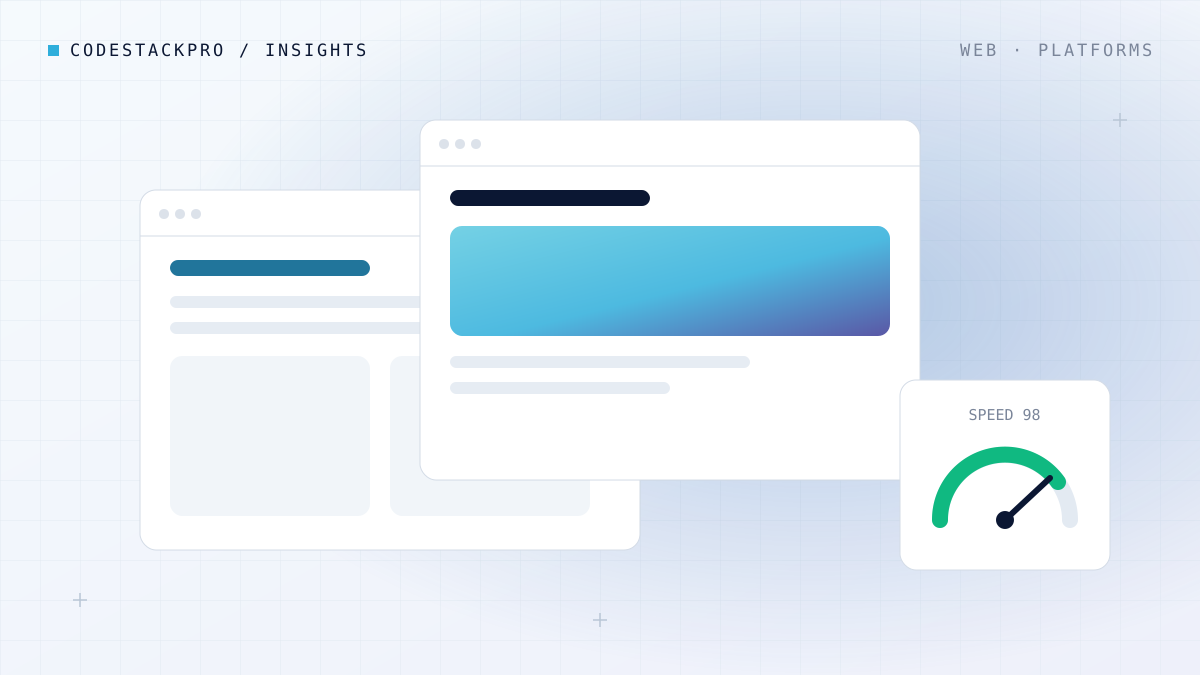
Both can rank extremely well. Next.js makes excellent Core Web Vitals easier to achieve through static generation, server rendering and edge caching. WordPress can be fast too, but performance depends heavily on hosting, theme quality and plugin discipline.
What about security and maintenance?
WordPress sites need regular core, theme and plugin updates to stay secure. Static or server-rendered Next.js sites have a smaller attack surface, though structural changes need a developer.
What is headless WordPress?
Editors keep using WordPress while the public site is built with Next.js. You get a friendly editing experience and a fast, secure front end — a popular choice for growing US brands.
Our rule of thumb
- Content-heavy marketing site, small team, tight budget → WordPress.
- Performance-critical site, product experience, custom integrations → Next.js.
- Large content team and premium performance → Headless WordPress + Next.js.
See how our web development team helps you choose — and build — the right stack.