Key takeaways
- An MVP proves one core value with the fewest features possible.
- Two weeks of discovery and design saves months of rework.
- Launch to real users early, measure, then decide what to build next.
What is an MVP, really?
A minimum viable product is the smallest version of your product that delivers its core value to real users — so you can learn what works before investing further. It is not a prototype, and it is not a half-finished full product.
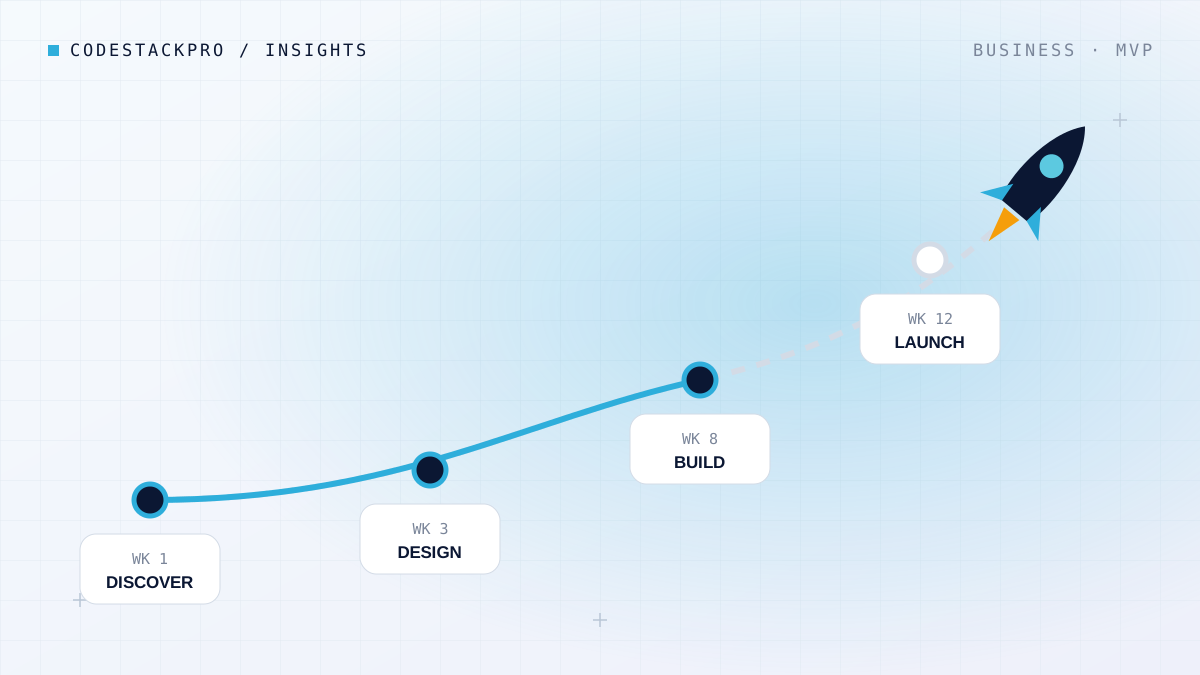
A 12-week roadmap
| Weeks | Phase | What happens |
|---|---|---|
| 1–2 | Discovery | Goals, users, must-have features, technical plan and estimate |
| 2–4 | Design | User flows, clickable prototype, quick user testing |
| 4–10 | Build | Two-week sprints with demos, testing and continuous delivery |
| 11–12 | Launch | Beta users, analytics, fixes, store submission and go-live |
Have an idea you want to launch?Get a free MVP scope, timeline and estimate within 48 hours.
Get a free estimate Mistakes that slow founders down
- Too many features. Every “nice to have” adds weeks. Ruthlessly cut to the core journey.
- Skipping discovery. Building before agreeing on scope leads to expensive rework.
- Custom everything. Use proven services for payments, auth and email.
- No analytics. If you can’t measure usage, you can’t learn from launch.
What happens after launch?
Watch real usage, talk to users and prioritise the next release based on evidence. Many of our clients move from an MVP project to a dedicated team once the product finds traction.